Evidence & understanding / Ask
Ask Tunza AI better questions—and inspect its sources
Understand Tunza 1 and Tunza 2, source-scope controls, follow-up questions and the difference between a citation and verified support.
Choose the source scope deliberately
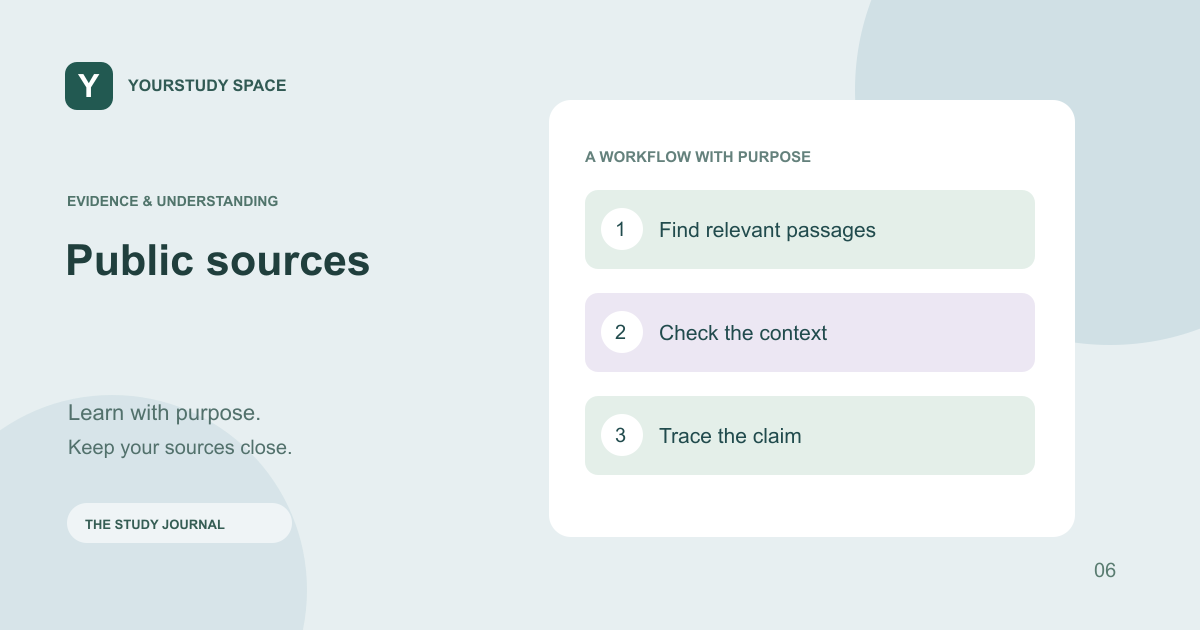
Ask has separate choices for public evidence, your uploaded material and a combined search. Use your material only when you want the answer confined to what your course documents say. Use public evidence when you want published references. The combined option can connect the two while keeping their origins distinct.
A course handout can explain what you were taught, but it does not independently establish that a clinical recommendation is current. If the answer compares a lecture with a public guideline, read both passages and look for differences in date, population and setting.
Choose the depth for the task
Tunza 1 is the quicker answer option, while Tunza 2 allows a more developed response. The server’s model configuration determines the models behind those options. Greater depth does not guarantee correctness, and a shorter answer should still preserve the evidence needed for its claims.
For an initial question, state the concept and the kind of help you need. For example: “Explain how this lecture distinguishes screening from diagnosis, using my material only.” For clinical treatment study, specify the population, setting and treatment phase when you know them. Those details can change which guidance is relevant.
Follow the reasoning through a conversation
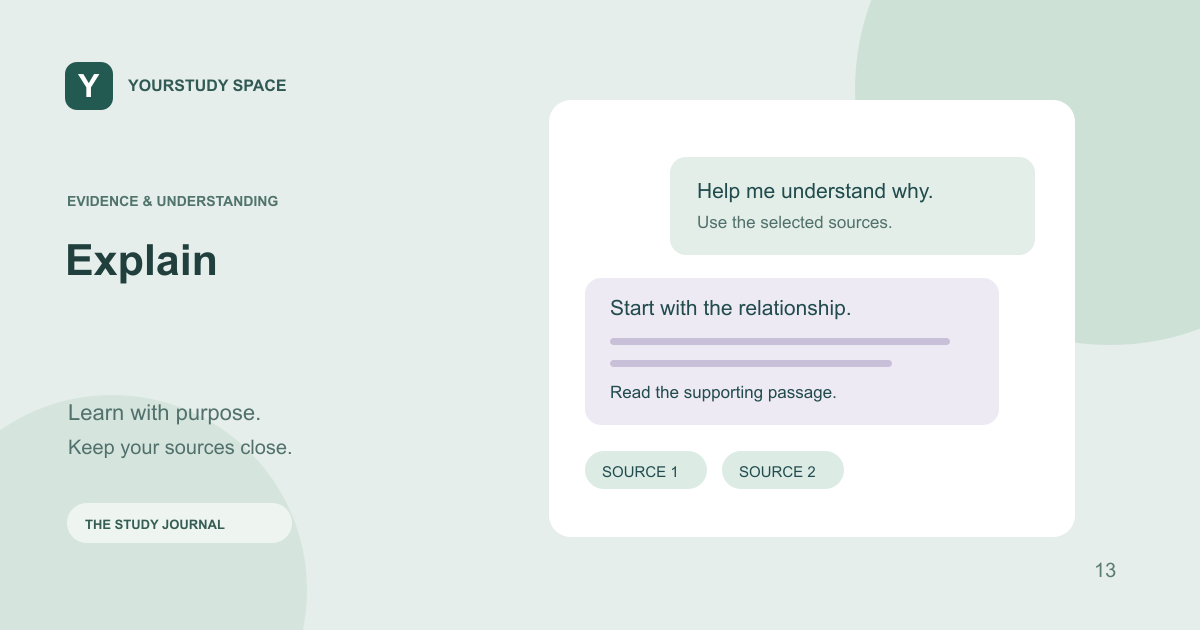
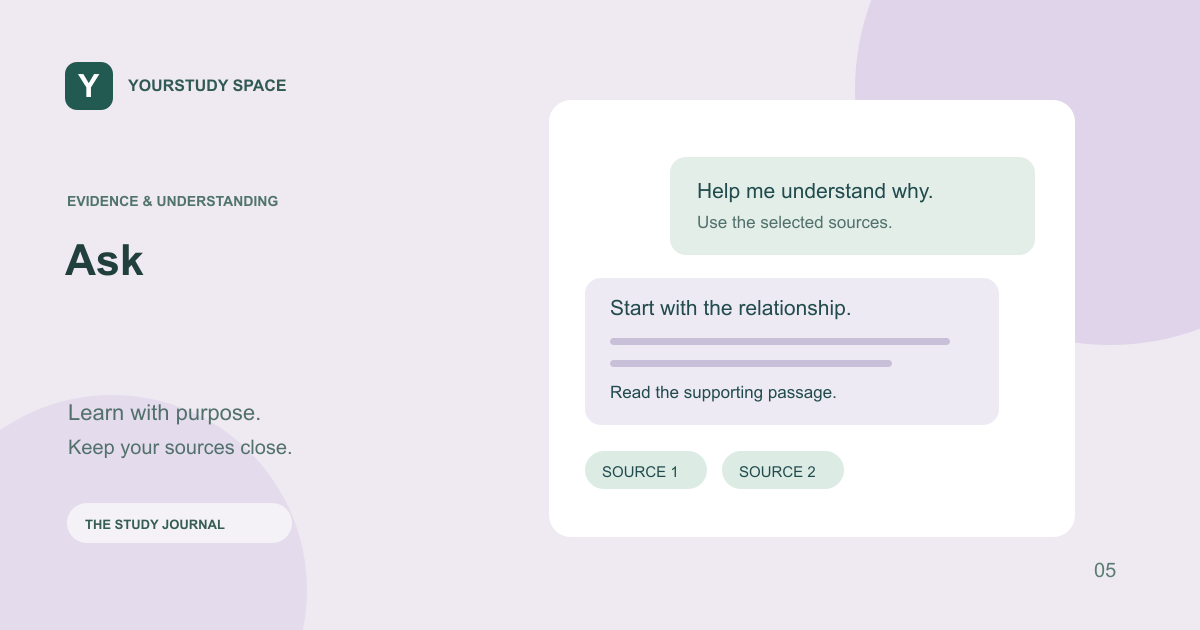
Follow-up questions can continue the topic without repeating the entire first message. If the discussion has changed subjects, name the new subject explicitly. Ask for a comparison, a simpler explanation or the passage behind a specific claim rather than accepting an answer because it sounds fluent.
Read the source list. An answer citing a research abstract, a drug label and a student upload is combining different kinds of material. Check which source supports each important statement. A paper about a complication is not automatically an answer to a question about first-line management of the underlying condition.
Treat a retrieval gap as a gap
If the app cannot retrieve relevant support, it should tell you what is missing. A confident answer without a supporting passage would not solve that problem. Try a more precise question or inspect an appropriate public reference. Never use the app’s answer as a real-patient order or prescription.
TRY THIS NEXT
Ask one clear question, choose the source scope, and open the citation behind the most important claim.
Try it in the app ↗Sign-in and an active trial or membership are required for study tools.About this guide
This product guide was prepared with AI assistance and checked against the app’s implemented workflows. It is not independently clinically reviewed. Features and service availability can change. It contains no real patient information.
For study support only. Review generated content and its sources; do not use it for real-patient diagnosis or treatment. Read the study and AI disclaimer.
Found something that needs correcting? Contact the YourStudy Space team.