Evidence & understanding / Explain
Use Explain to work through a difficult lecture concept
Move from an unclear paragraph to a focused explanation, a checked analogy and a question you can answer yourself.
Start with the point of confusion
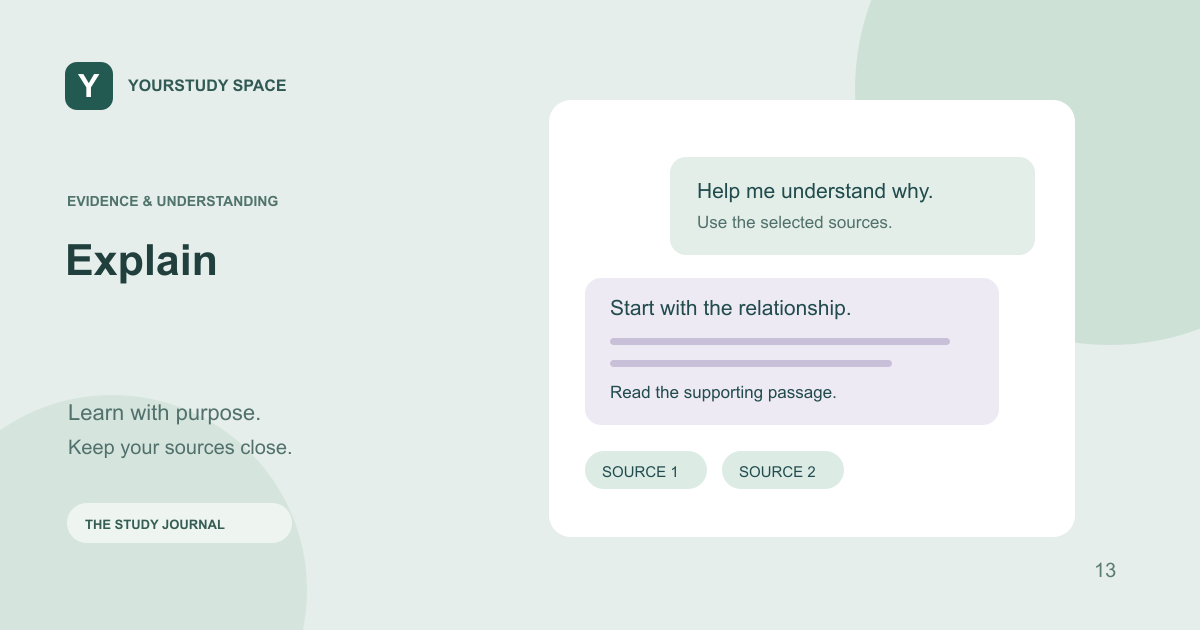
“I do not understand this topic” is a reasonable starting feeling, but a more precise request produces a more useful explanation. Name the term, relationship or sentence that loses you. Select the relevant document when your question comes from a lecture.
Explain is designed for working through concepts in YourStudy Space. You can use it before building practice material, or after a question reveals a gap. You do not have to create a whole study set to clarify one paragraph.
Ask for a progression
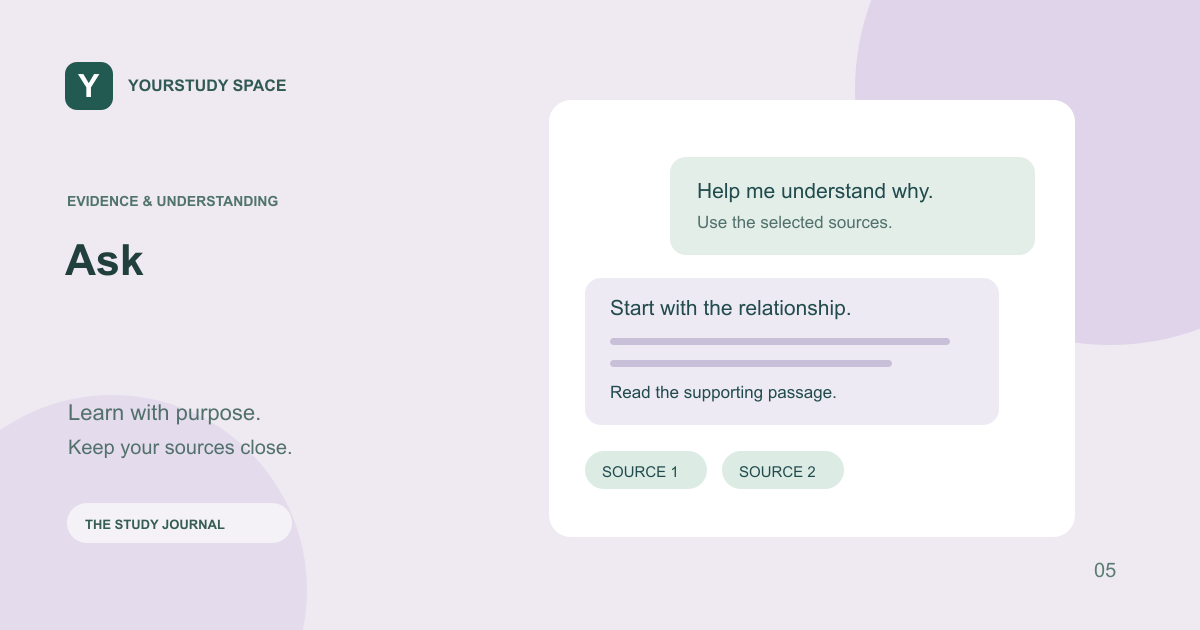
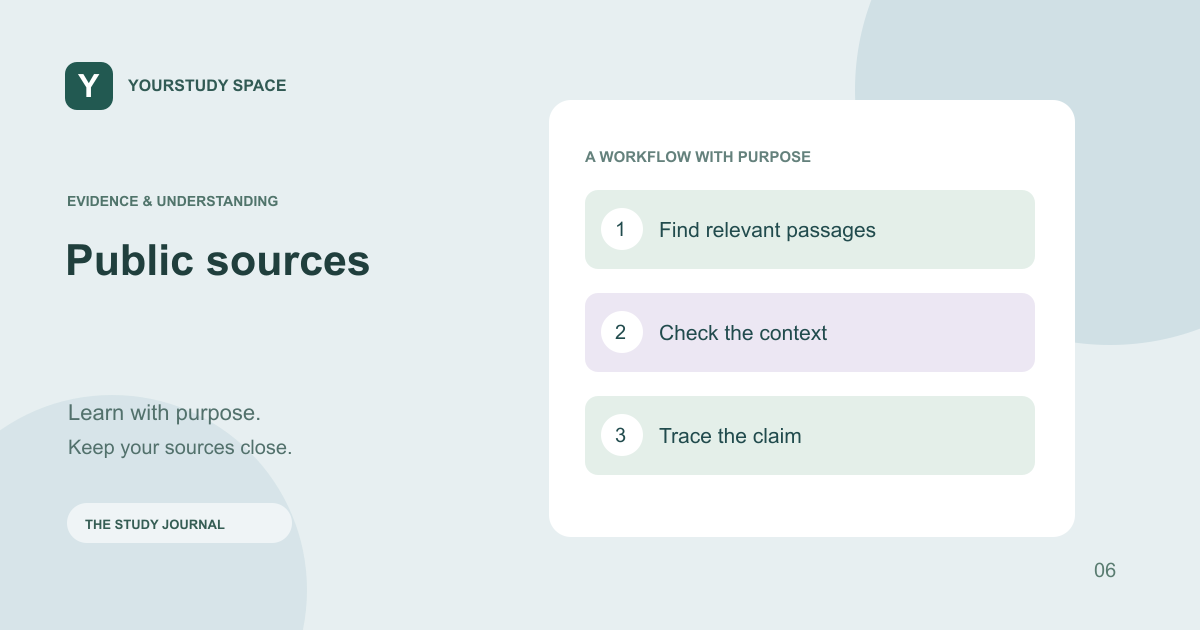
Begin with a plain-language definition, then ask how the parts connect. Once the basic relationship is clear, ask for an example that stays within the source material. Keep track of where the explanation is describing the document and where it is using public references.
An analogy can make an unfamiliar idea easier to discuss, but every analogy has limits. Ask which part of the comparison breaks down. Do not memorize an analogy as if it were the literal mechanism or a complete clinical rule.
Check whether you can use the idea
Close the explanation and describe the concept in your own words. Then make a prediction about a small change in the example. If you cannot explain why your prediction follows, return to that step rather than rereading the entire response.
If the explanation and your lecture disagree, inspect the passages before deciding one is wrong. They may use different definitions, populations or levels of detail. A source-based comparison can clarify the disagreement; a fluent answer alone cannot resolve it.
Choose the next format deliberately
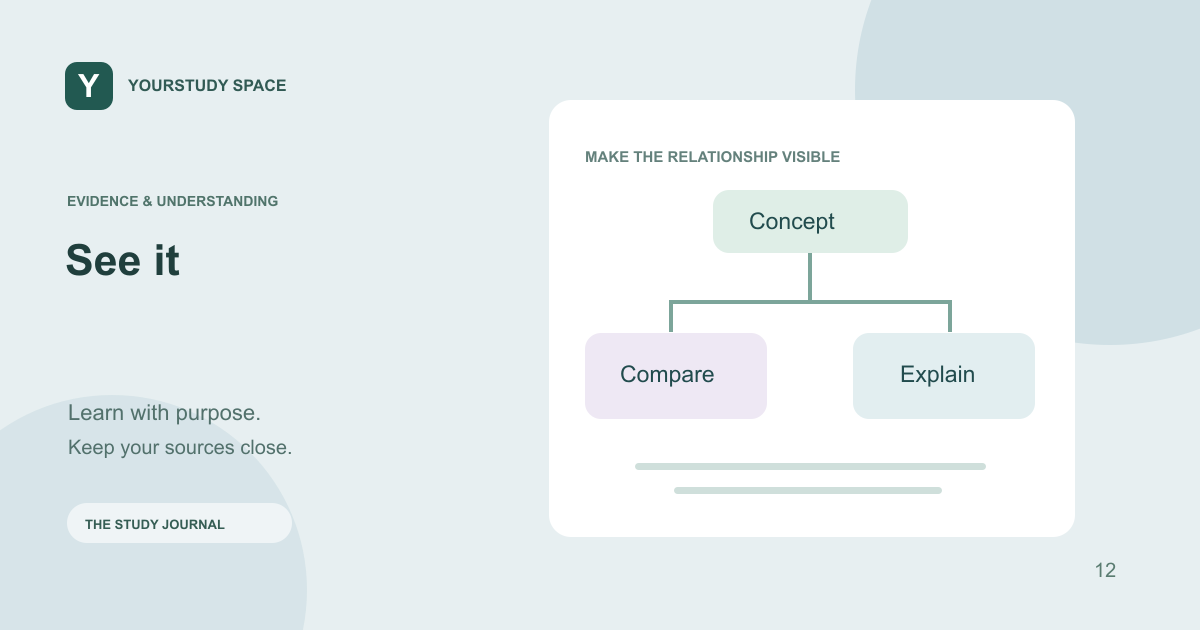
Use See it if the remaining difficulty is spatial or relational. Use Study Kit if you are ready to answer questions about the concept. Use Ask for a follow-up that needs a broader source search. Keep the explanation saved so your next session can begin at the point you reached, rather than starting from scratch.
TRY THIS NEXT
Your stopping point is not “the answer sounds clear”; it is “I can explain the relationship myself.”
Try it in the app ↗Sign-in and an active trial or membership are required for study tools.About this guide
This product guide was prepared with AI assistance and checked against the app’s implemented workflows. It is not independently clinically reviewed. Features and service availability can change. It contains no real patient information.
For study support only. Review generated content and its sources; do not use it for real-patient diagnosis or treatment. Read the study and AI disclaimer.
Found something that needs correcting? Contact the YourStudy Space team.